White Cane Awareness Day 2026: Walk in Anne Connelly’s Footsteps
Every year on October 15, White Cane Awareness Day celebrates the independence and freedom of movement that white canes and guide dogs give people who are blind or have low vision.
Here in Vermont, there’s a special way to mark it this year. On October 16, you can walk the same Burlington route Anne Connelly took with her guide dog in 1930, the first time Vermonters ever saw a trained guide dog.
A quick history of the white cane
In 1964, Congress passed a joint resolution authorizing the president to proclaim October 15 as White Cane Safety Day. President Lyndon B. Johnson issued the first proclamation that same year, recognizing the white cane as a symbol of independent travel.
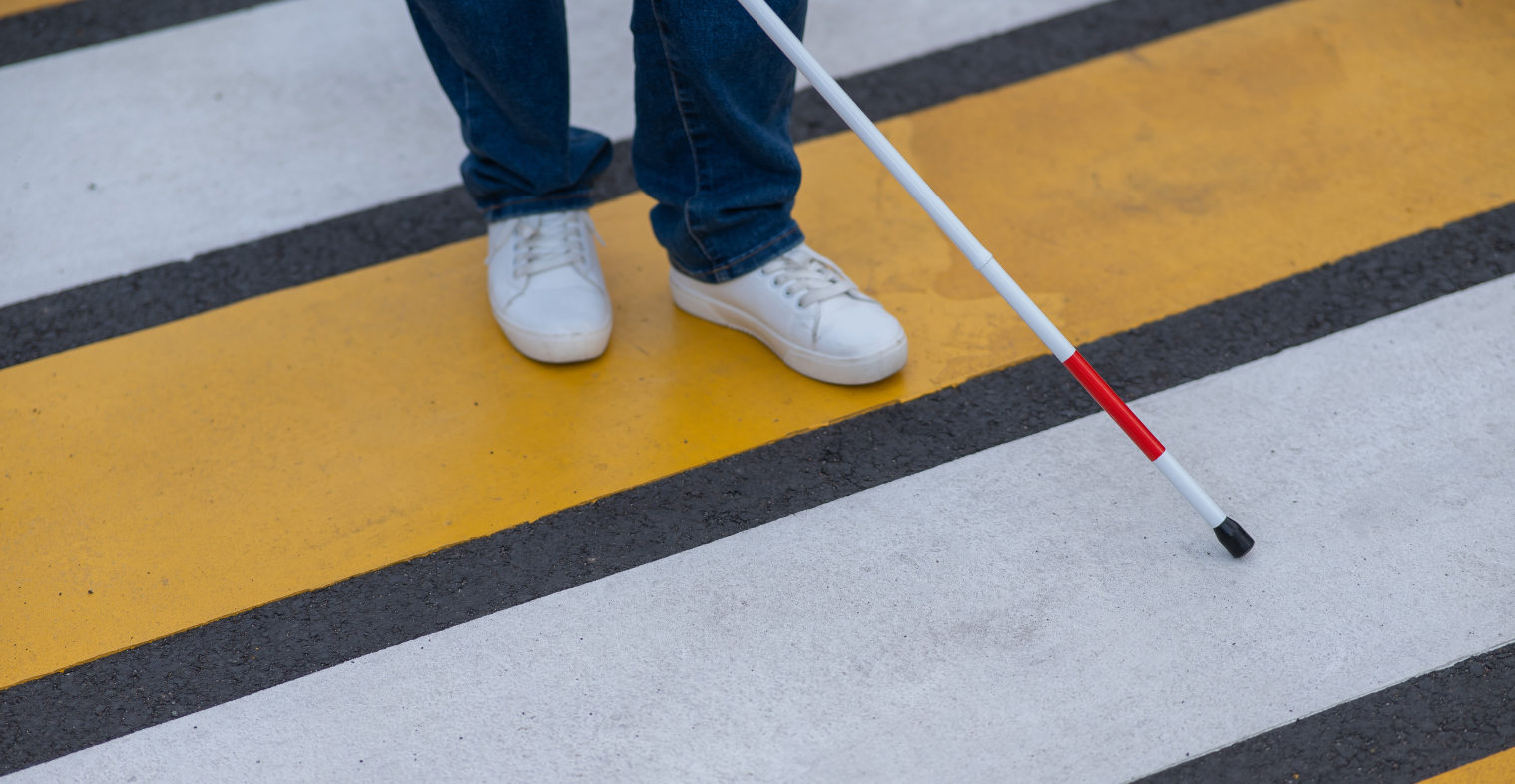
The long white cane does two jobs at once. It helps the person using it find obstacles, curbs, and changes in terrain, and it lets everyone nearby know the traveler is blind or has low vision. Guide dogs support independent travel too, helping their handlers move around obstacles and through their communities.
A reminder for drivers
White Cane Awareness Day is also about pedestrian safety. Vermont law and the Vermont DMV Driver’s Manual ask drivers to keep a few things in mind:
- Stop and yield. Come to a full stop when someone using a guide dog or a white cane held in a raised or extended position is crossing or trying to cross the street.
- People who are blind or have low vision have the same pedestrian rights whether or not they use a cane or guide dog.
Read the full text of Vermont law 23 V.S.A. § 1057, Duty toward persons who are blind, and the Vermont DMV Driver’s Manual.
Meet Anne Connelly
Long before White Cane Awareness Day became a national observance, Anne Connelly was changing what was possible for blind Vermonters. She was a blind educator, organizer, and advocate whose work helped build what is now the Vermont Association for the Blind and Visually Impaired (VABVI).
Starting in 1926, Anne taught Braille along with practical skills like typing, weaving, and caning. She organized classes across the state, recruited students and volunteers, pushed for employment opportunities for blind Vermonters, and challenged public misconceptions about blindness.
In 1928, she introduced Vermont’s first white cane. Two years later, she walked from her home on Pearl Street in Burlington to her office at City Hall with her guide dog, Betty. It was the first time she had traveled in Vermont without another person guiding her.
Today, VABVI carries that work forward. It provides orientation and mobility instruction, rehabilitation services, assistive technology training, and more to Vermonters who are blind or have low vision, throughout the state and at no cost to clients. Want to hear more about VABVI’s work? Watch our webinar with VABVI on 100 years of service.
Join the commemorative walk in Burlington
On Friday, October 16, 2026, VABVI and the Vermont Division of the Blind and Visually Impaired (DBVI) will honor Anne’s legacy by retracing her 1930 route from Pearl Street to City Hall.
- Date: Friday, October 16, 2026
- Time: 10:00 a.m. ET
- Starting point: 200 Pearl Street, Burlington, Vermont, across from the Ronald McDonald House
- Route: About a quarter mile to Burlington City Hall
- Prefer not to walk? Meet in the Sharon Bushor Room at City Hall at 10:00 a.m.
When everyone arrives at City Hall, the City of Burlington will honor Anne and VABVI with a proclamation, and a commemorative plaque will be installed outside her former office, Room 214. The morning wraps up with light refreshments and a program about the forthcoming Burlington History and Culture Center.
Registration is requested so organizers can plan for attendance. Register for the Burlington White Cane Awareness Day walk.
Not in Vermont? Find an event near you
There isn’t one central listing of White Cane Awareness Day events nationwide, so your best bet is to go local. Check with your nearby chapter of the National Federation of the Blind (NFB) or the American Council of the Blind (ACB) to see what’s happening in your area.
And if you’ll be in Burlington on the 16th, come walk the route Anne walked almost a century ago!
