New Accessibility Laws, Lawsuits, and Looming Deadlines
For years, digital accessibility was frequently treated as a nice-to-have or an afterthought hidden away on a developer’s compliance checklist. That era is officially over. Across the United States, federal pushback, state-level legislation, and grassroots civil rights lawsuits are converging to create a new reality: digital equity is now a strictly enforced legal requirement.
Whether you manage an enterprise website, a healthcare portal, or a public sector agency, a wave of new legal standards is completely reshaping your digital liability.
1. The HHS Section 504 Deadline
The U.S. Department of Health and Human Services (HHS) final rule under Section 504 of the Rehabilitation Act has brought digital accessibility to the absolute forefront of the healthcare sector. This rule mandates that any program or activity receiving federal financial assistance from HHS must ensure its digital content is fully accessible to individuals with disabilities and conforms to WCAG standards.
While the rule sets a clear compliance mandate, the federal government has issued a critical update that adjusts the timeline. To give smaller hospitals and rural providers adequate time to adjust, the HHS Office for Civil Rights extended the compliance deadlines, pushing the requirement to:
- May 11, 2027, for recipients with 15 or more employees
- May 10, 2028, for smaller entities
Despite the delay, healthcare providers, insurance platforms, and medical tech companies cannot afford to wait. If your website, patient portal, or mobile app locks out individuals with disabilities, you are actively facing severe regulatory non-compliance and legal exposure.
2. Federal Delays Draw Grassroots Legal Action
While some sectors face strict upcoming deadlines, others are experiencing frustrating federal bottlenecks, and advocates are taking matters into their own hands. In a major civil rights move, high-profile attorneys Eve Hill and Michael Abrams have filed a lawsuit on behalf of the National Federation of the Blind (NFB) against the Trump-Vance administration.
The NFB lawsuit against the DOJ and HHS targets unexpected delays to critical federal website accessibility regulations, arguing that the administration violated the Administrative Procedure Act by pushing back deadlines without proper public notice or input. This legal action sends an unmistakable message to both public and private entities: even if the federal government pauses or delays formal rulemaking, the advocacy community will not wait around. The liability under the Americans with Disabilities Act (ADA) remains active and urgent, and organizations will be held accountable in court.
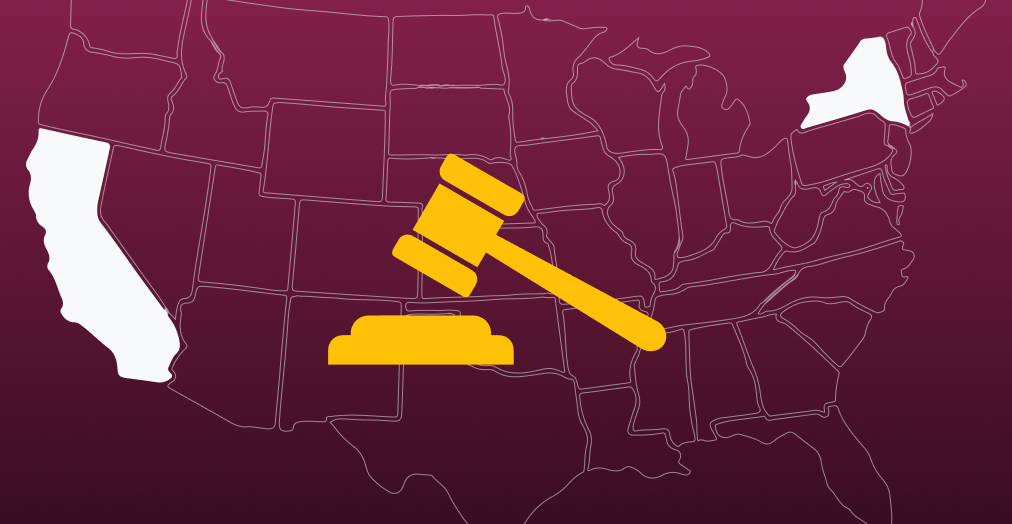
3. State Legislatures Take the Lead in California and New York
Where the federal government stalls, state legislatures are aggressively stepping in to codify digital civil rights into state law. Two monumental bills are heavily impacting the digital landscape:
- California SB 942 (The California AI Transparency Act): Broadly focused on AI safety, data transparency, and structural accountability, SB 942 requires large tech providers to implement mandatory “manifest and latent” watermarks and AI-detection tool verification mechanisms. It signals a much higher level of scrutiny on tech infrastructure and digital access within the state.
- New York Technology Law Upgrades: Aligning with stricter local requirements, New York state has removed ambiguity surrounding regional web requirements. State legislation (STL §103-d) now dictates that New York State digital services must conform to WCAG 2.2 Level AA by January 2027—a standard that aggressively mandates that state agencies, public entities, and their commercial contractors remove digital barriers ahead of the broader federal DOJ rule deadline in April 2027.
Don’t Wait for an Audit or a Lawsuit
At Accessible Web, we’ve always maintained that waiting for a final enforcement deadline or a demand letter is the most expensive way to handle accessibility. True progress and true legal protection come from taking proactive, bite-sized steps to build an internal culture of compliance.
The legal landscape is tightening everywhere, from state capitals to federal courts. Ensuring your website conforms to WCAG 2.1 AA isn’t just about risk mitigation infrastructure; it’s about respecting the diverse members of your community and ensuring no one is locked out of essential services.
Secure Your Digital Compliance Roadmap Today
Unsure of your current legal exposure under these incoming state and federal rules? Let’s get you compliant and legally shielded before a deadline catches you off guard.
